



What do you need to become a Paid-On-Call Volunteer Firefighter or Field Incident Technician (FIT)?
- Compassion: First and foremost we deal with helping people. Firefighters must be honest, caring, reliable individuals with a desire to help others.
- Commitment: Emergencies happen 24 hours a day, 365 days a year. Firefighters are expected to respond to emergencies and weekly skill development training, whenever available.
- Time: Firefighters are required to attend a minimum three-hour practice session once weekly, and to attend emergency page outs whenever available.
- Good Health: Firefighting is a strenuous job, both mentally and physically. A mental health resiliency interview, a physical test and a doctor’s note will be required before hiring begins.
- Police Information Check with Vulnerable Sector Query: You will need to obtain a RCMP record check, with no offensives pertaining to the job of a Paid on Call Firefighter.
- Driver License: Class 5 or better with an acceptable driver’s abstract will be required with application.
A responsive and sustainable fire-rescue service, effectively meeting community needs and valued by those we serve
What does Salt Spring Island Fire Rescue do?
Our Department offers many community services year round and our members constantly provide:
- Fire suppression and prevention
- Rapid response to medical emergencies
- Wildfire Response
- Technical Rescue
- Disaster Response
- FireSmart Program
- Fire and Life Safety education programs in our schools and community
Salt Spring Island Fire Rescue and its members work hard together to make Salt Spring Island a safer, better place to live.
Salt Spring Island Fire Rescue strives hard to have a high standard of training. Through your probationary period you will receive your training from Firefighters teaching their area of expertise.
Areas of training you may receive as a probationary Firefighter:
- First Responder Paramedic III
- CPR Level C
- Auto External Defibrillator (AED)
- Spinal Immobilization
- Emergency Driver Training
- Air Brake endorsement
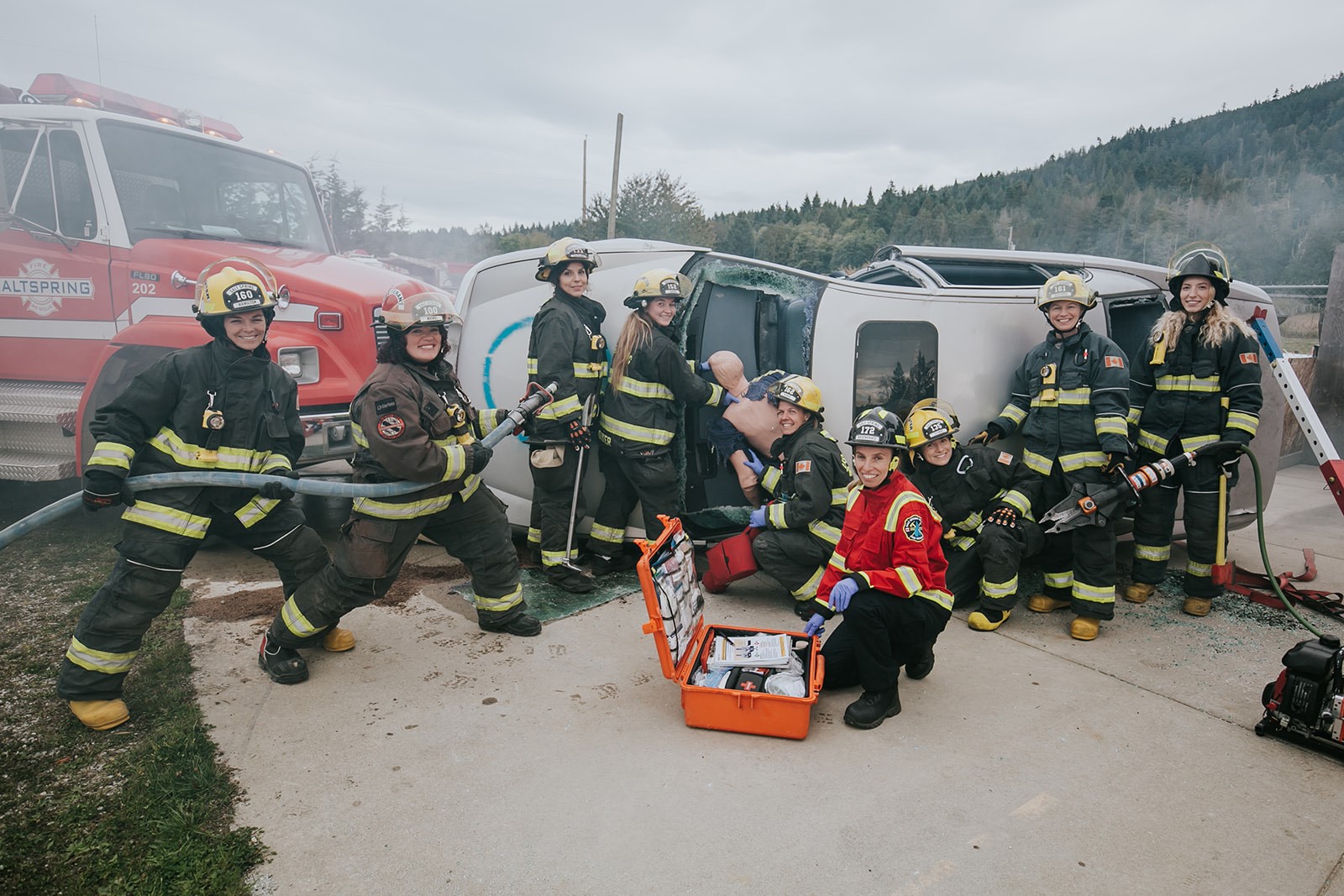
- Auto Extrication
- Technical Rescue
- Live Fire
- Hazardous Materials
- NFPA 1001 – Level 1 & 2
Satisfying and rewarding, Firefighting offers constant challenges both personally and professionally. Being a part of Salt Spring Island Fire Rescue will change your life.
Always learning, engaging and adapting to be response ready
What does a Field Incident Technician (FIT) do?
FIT members are responsible for fire-ground communications and an assortment of command-aide tasks. FITs are the primary accountability managers, duties also include staging management, rehab management and some cold-zone activities. FITs assist the incident commander by managing phone calls, radio communications, pre-plans, hazmat identification and documentation.
SSIFR asks that a FIT member maintain a minimum of 70 hours of training per year for active duty. The FIT training is very specific and focuses on only a few disciplines.
Training can include:
- Command-aide skills and accountability
- Radio communications (including amateur radio operations)
- Drone operations
- Much of the training occurs alongside of the firefighters and officers
- Public Education
Paid-On-Call Firefighter Application 2026/27
Please complete your application form and either email to admin@saltspringfire.com, send by mail or drop off at: 455 Lower Ganges Road, Salt Spring Island, BC Canada V8K 2P6